Disclosure: This post includes affiliate links. If you make a purchase through them, I may earn a small commission at no extra cost to you. This helps support the content I create.
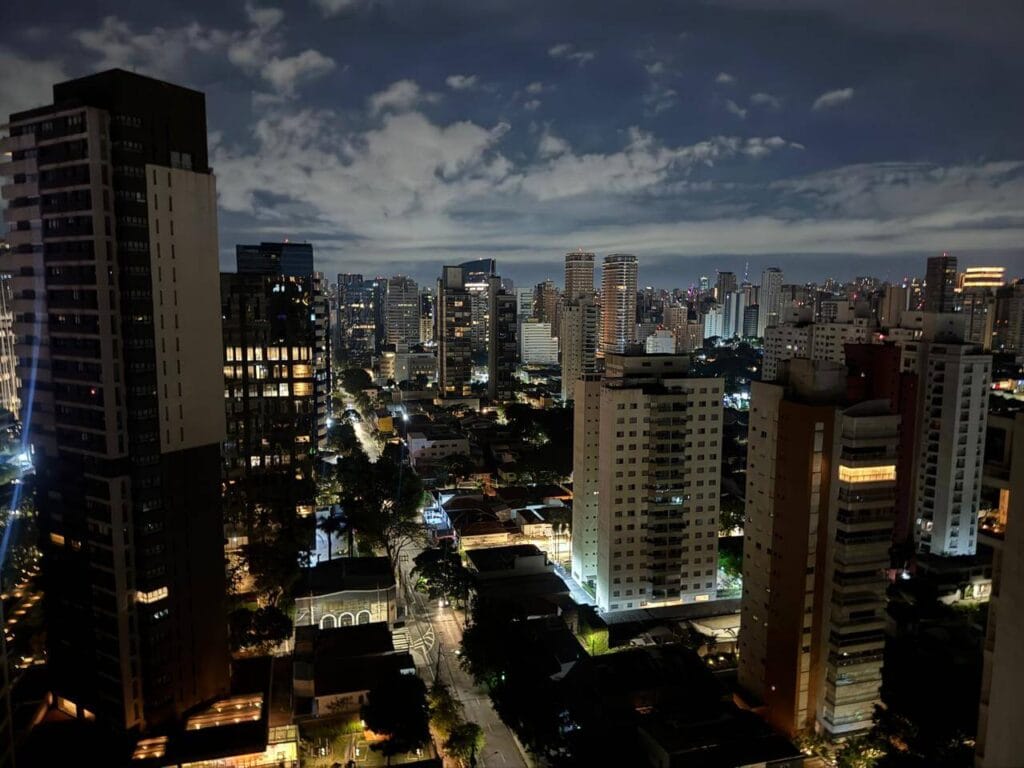
Sao Paulo is an incredible city — and one I truly love. I’ve always had a special connection with Sao Paulo. Often called a “concrete jungle,” it’s a city of skyscrapers and no beaches at all, but that’s exactly part of its charm.
What I love most about Sao Paulo is how much it has to offer. Museums, cultural centers, viewpoints, parks, historic landmarks, street art, bars, shops, malls, concerts, and major events — there’s always something happening, no matter how many times you visit.
And then there’s the food. Sao Paulo has one of the best and most diverse food scenes I’ve ever experienced. You can eat incredibly well here every single day.
There’s truly no shortage of experiences in this city. And in this guide to the Best Things to Do in Sao Paulo, I’m sharing my personal picks — the places and activities that really show what makes this city so special.
📍 Short on time? These tours cover São Paulo’s main highlights
If you don’t have much time in São Paulo or prefer a guided experience, these two tours are a great way to see the city’s main highlights without worrying about logistics:
🔗 Private São Paulo City Tour (4 hours)
A private, tailor-made tour with pickup included. You choose the pace, route, and focus of the visit — ideal if you want flexibility or a more personalized experience.
🔗 São Paulo Main City Sights Tour (7 hours – Shared Group)
A comprehensive guided tour covering São Paulo’s main attractions in one day, including Downtown, Municipal Market, Paulista Avenue, Jardins, Ibirapuera Park, and Batman Alley. Perfect if you want a broad overview of the city.
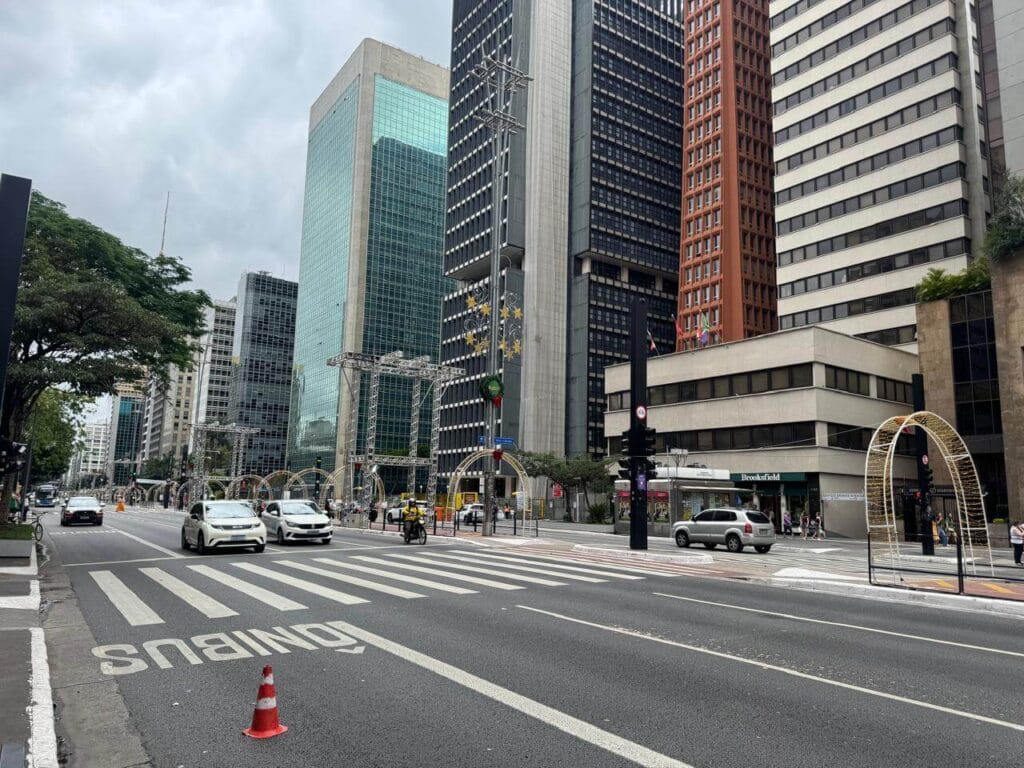
Walking along Avenida Paulista from end to end is, in my opinion, one of the best things to do in Sao Paulo — especially if it’s your first time in the city.
Paulista is much more than just one of Sao Paulo’s most important avenues. It’s a financial hub, a cultural center, and one of the city’s most iconic tourist spots all at once.
As you walk, you’ll pass corporate headquarters, shopping malls, street vendors, cultural institutions, and everyday city life happening side by side.
Landmarks like Museu de Arte de São Paulo (MASP) and Sesc Avenida Paulista share space with shopping centers such as Shopping Cidade São Paulo, Shopping Center 3, and Shopping Pátio Paulista.
Every block feels different, with museums, cinemas, bookstores, popular shops, and street stalls.
Honestly, you don’t need a strict plan to enjoy Paulista. Walking without a destination is already an experience in itself. If you prefer, you can also rent a bike or an electric scooter and follow the bike lane that runs the entire length of the avenue.
⚠️ Safety Tip: Paulista is considered one of the safest and best-policed areas in the city, and I personally feel comfortable walking there, including during my most recent visits. Still, as in any busy area, it’s important to keep an eye on your phone and belongings, especially in crowded spots.
Visit Paulista on a Sunday
If you can, go on a Sunday morning or early afternoon. From around 7 am to 4 pm, the avenue is closed to cars and becomes a vibrant pedestrian boulevard.
Locals come here to walk, bike, exercise, enjoy live music, watch street performances, magic shows, dance groups, and browse stalls selling all kinds of things. The atmosphere is lively, relaxed, and very Sao Paulo.
You might even stumble upon a protest, a concert, or a marathon — Paulista is famous for hosting spontaneous and organized events. That unpredictability is part of the experience.
🚴 If you want to experience Avenida Paulista and São Paulo’s historic center in a dynamic and safe way, I recommend this downtown bike tour. It covers much more ground than walking, includes photo stops at iconic landmarks, and is led by a local guide — a great option if you want context, comfort, and an easy way to connect with the city.
2. Visit the MASP (Museu de Arte de São Paulo)
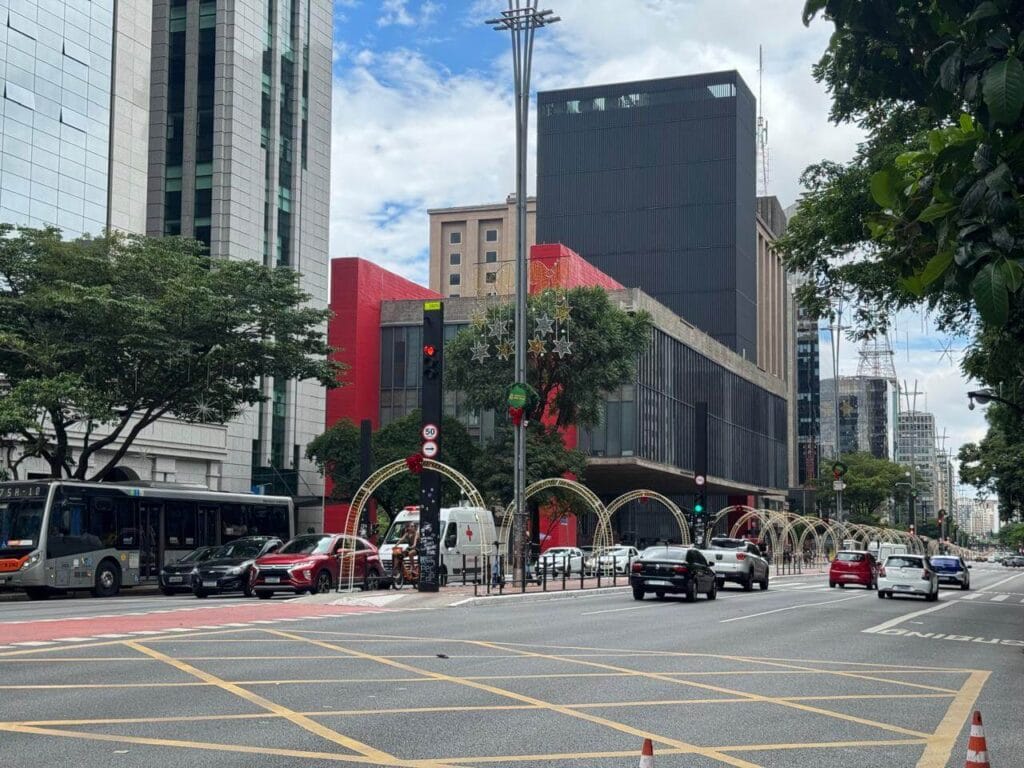
Located right on Avenida Paulista, Museu de Arte de São Paulo (MASP) is one of the most important cultural landmarks in Brazil and one of the best things to do in Sao Paulo.
The museum is a landmark not only for its collection, but also for its iconic modernist building. The structure, suspended by its famous red columns, has become one of Sao Paulo’s most recognizable symbols.
The open space underneath (vão livre) is a true public square, hosting events, street performances, and the traditional antiques fair on Sundays. In 2024, MASP expanded the museum with the opening of a new building, further strengthening its presence on Avenida Paulista.
Inside, MASP houses the most important collection of European art in the Southern Hemisphere, with over 11,000 works spanning from Antiquity to the 21st century. You’ll find pieces by artists such as Van Gogh, Monet, Picasso, Renoir, Botticelli, and Portinari, alongside Brazilian, African, and Asian art.
MASP also features excellent temporary exhibitions throughout the year, plus a café and a restaurant — making it easy to combine culture with a relaxed break.
Check out this complete guide to Sao Paulo, with tips on the best time to visit, how to get there, where to stay, and much more!
3. Explore Other Cultural Spaces Along Avenida Paulista
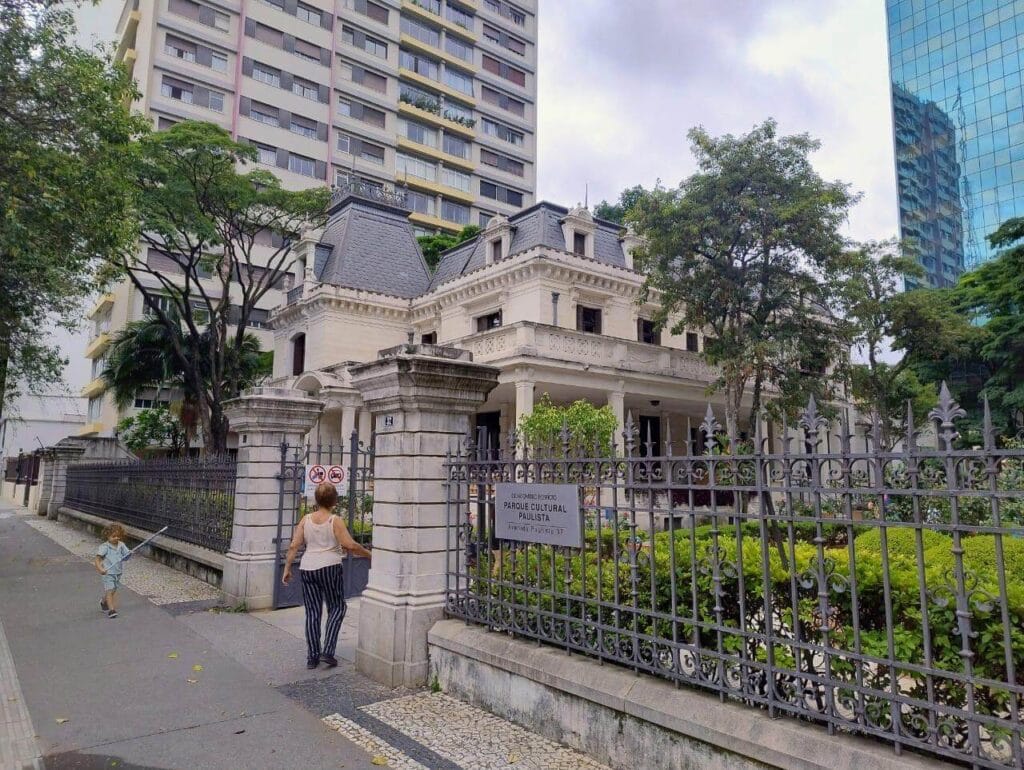
Avenida Paulista concentrates some of the best cultural spaces in Sao Paulo, and the best part is that many of them are free.
My suggestion is to treat this as a cultural walking route, ideally spread over two days, combined with a visit to MASP — otherwise, it can get a bit overwhelming. That’s exactly how I did it on my first trip to São Paulo, and it worked perfectly.
Here are the highlights, all within walking distance:
- Japan House São Paulo – Dedicated to Japanese culture, covering art, design, technology, books, gastronomy, and education. Even if you don’t go inside, the building itself is worth stopping for.
- Casa das Rosas – A beautiful French-style mansion surrounded by a rose garden. Focused on literature and poetry, it’s a calm break from the avenue’s buzz. The café is excellent and highly praised, making it a perfect spot for a coffee stop.
- Sesc Avenida Paulista – One of the most popular cultural spaces in the city. The building has exhibitions, galleries, a library, kids’ areas, and a snack bar.
Personal tip: the rooftop viewpoint offers one of the best views in Sao Paulo — I did it myself, and it was unforgettable.
⚠️ Note: visits to the rooftop require advance booking via the Credencial Sesc app. Sunset time (around 5–6:30 pm) is the most popular slot, so if that’s your goal, book well in advance. - Itaú Cultural – Just a short walk away, this free cultural center offers exhibitions, theater performances, concerts, workshops, and talks. Don’t miss the beautiful staircase decorated with Brazilian fauna and flora illustrations — it’s very photogenic.
- Centro Cultural Fiesp – Another excellent free option, with rotating exhibitions, a bookstore, and a café. The building’s architecture is a highlight on its own. Theater performances usually happen from Thursday to Sunday and require advance booking.
- Instituto Moreira Salles Paulista (IMS) – The building has seven floors dedicated to photography, cinema, exhibitions, a library, and classrooms — all with free entry. Don’t skip the open ground floor and, especially, the rooftop terrace at Praça IMS, which offers a beautiful view over Avenida Paulista.
If you enjoy museums and cultural spaces, this stretch of Avenida Paulista is one of the most rewarding areas in the city, offering a perfect mix of art, architecture, and everyday life — all within easy walking distance.
4. Explore Sao Paulo’s Historic Center
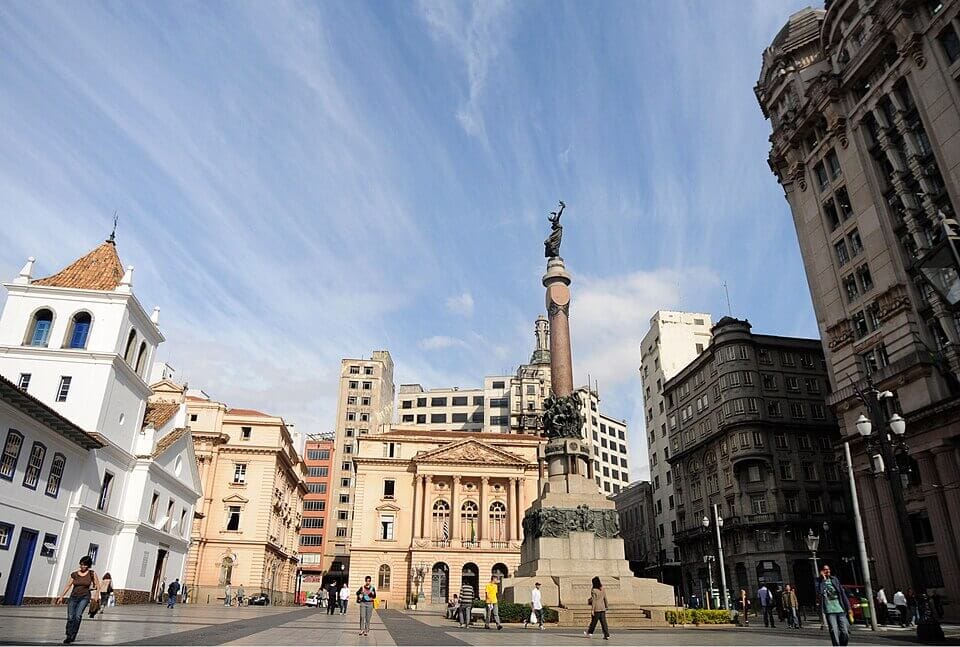
Sao Paulo’s Historic Center is where the city was born and where many of its most important landmarks are concentrated. Walking through this area is one of the best things to do in São Paulo if you want to understand its history, architecture, and cultural roots, including:
- Catedral da Sé & Praça da Sé (Marco Zero) – One of the city’s most iconic landmarks. The cathedral marks São Paulo’s geographic center and impresses with its neo-Gothic architecture, stained glass, mosaics, and one of the largest organs in South America.
- Pátio do Colégio – The birthplace of São Paulo, founded in 1554 by Jesuit missionaries. Today, the complex includes a church, museums, a library, and a café that’s well worth stopping by for a coffee — it’s really good and a great break during your walk through the Historic Center.
- Solar da Marquesa de Santos – One of the oldest preserved houses in the city, offering a glimpse into colonial São Paulo and its urban evolution.
- Mosteiro de São Bento – Famous for its beautiful interior and traditional Gregorian Chant masses, which are free and open to the public. The monastery also hosts a very popular monthly brunch (paid and highly sought after).
- Largo São Francisco & Igreja de São Francisco – A historic square and church connected to one of Brazil’s most traditional law schools, full of academic and cultural history.
- Theatro Municipal de São Paulo – One of the city’s most beautiful buildings, inspired by European opera houses. Even if you don’t attend a performance, the architecture alone is worth the stop.
- Viaduto do Chá – A classic pedestrian bridge connecting the old and new parts of downtown, with great city views along the way.
- Edifício Martinelli – One of São Paulo’s most historic skyscrapers and a symbol of the city’s vertical growth. Guided visits take you up to the rooftop, where you get panoramic views of downtown São Paulo and a real sense of the city’s scale and history.
- Farol Santander – A cultural center set inside a former bank building, with exhibitions, immersive experiences, and an observation deck offering beautiful views over the historic center. One of the highlights is the Bar do Cofre, located inside the original bank vault — a very unique place to stop for a drink after exploring the building.
⚠️ Safety Tip: Like many large city centers, this area has a visible population of people experiencing homelessness. The area is also well policed, but it’s still important to keep an eye on your belongings — especially your phone and wallet. Avoid wearing jewelry or carrying valuables, and you’ll be able to explore the Historic Center more comfortably.
🏛️ If you want to explore São Paulo’s Historic Center with more context and peace of mind, I recommend this downtown walking tour with a local guide. It helps you understand the city beyond the surface — its history, culture, and everyday life — while moving through the area in a safer, more comfortable way, with optional food stops along the route.
5. Relax at Ibirapuera Park
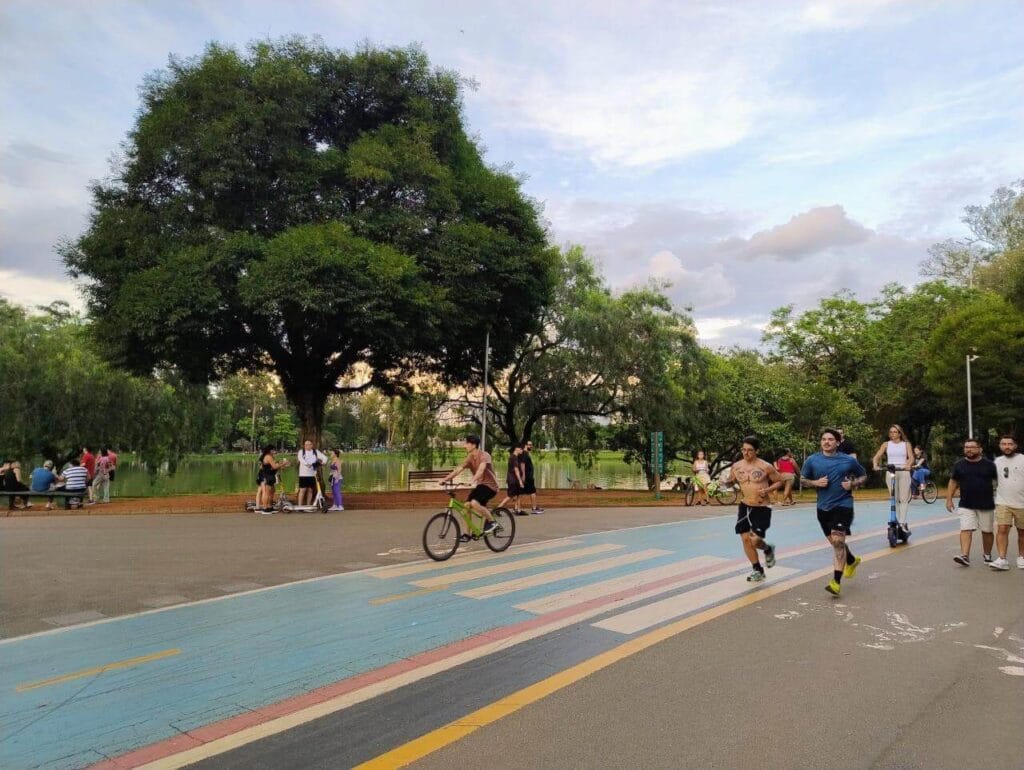
Parque Ibirapuera is Sao Paulo’s green oasis — and easily one of the best things to do in Sao Paulo. It’s the city’s most famous park and a favorite gathering spot for locals, offering a perfect break from the urban pace.
With over 158 hectares, Ibirapuera is ideal for walking, running, biking, skating, playing sports, or simply laying out a blanket for a picnic.
The park is well maintained, full of green areas, lakes, and shaded paths, and it’s common to see people exercising, reading, dancing, or just enjoying the outdoors.
Beyond nature, the park is also a major cultural hub. Inside Ibirapuera, you’ll find institutions like the Museu de Arte Moderna (MAM), Museu Afro Brasil, the Fundação Bienal de São Paulo, and the Auditório Ibirapuera, which often hosts free or affordable events.
Other highlights include the Planetário Prof. Aristóteles Orsini, the Oca do Ibirapuera, and the peaceful Pavilhão Japonês, a quiet and beautiful spot inside the park.
Ibirapuera is also considered very safe, with constant security and plenty of people around throughout the day. Wear comfortable shoes, bring water, and take your time — this is a place to enjoy Sao Paulo from a different perspective.
6. Explore Liberdade (Sao Paulo’s Japanese District)
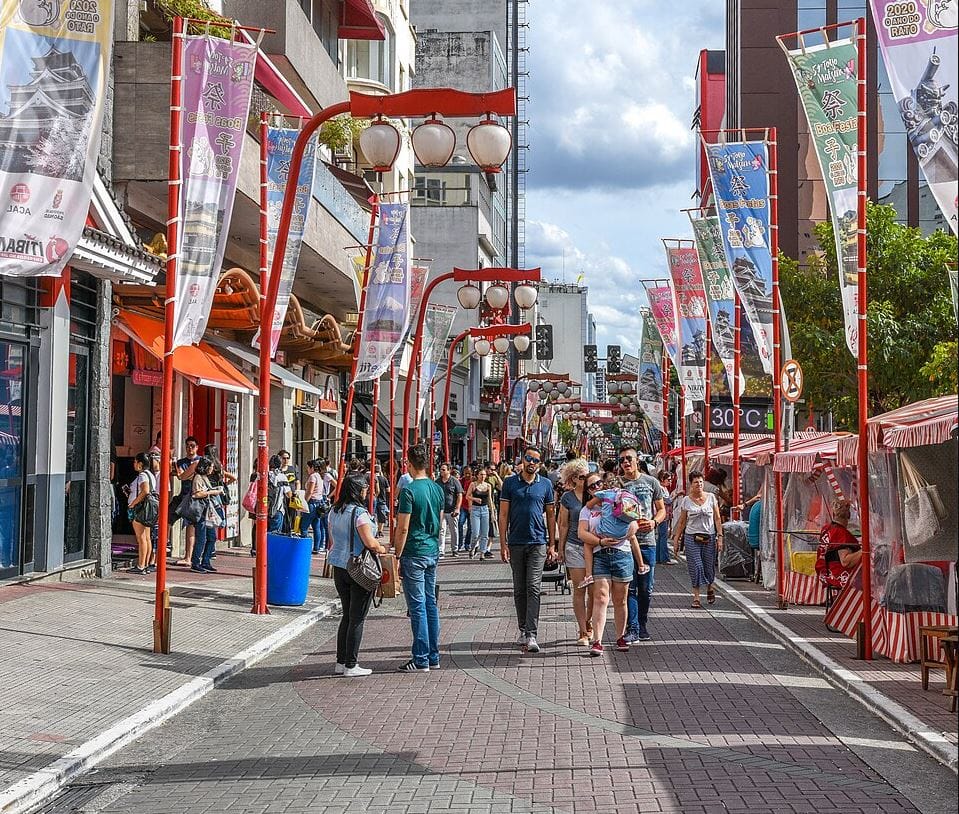
Home to the largest Japanese community outside Japan, Liberdade is one of the most unique and vibrant areas in Sao Paulo.
While it’s historically known as the city’s Japanese district, Liberdade today is a multicultural hub, also shaped by strong Chinese and Korean communities. The result is a rich mix of cultures, flavors, and traditions you won’t find anywhere else in the city.
As you walk around, you’ll notice the iconic Japanese lanterns lining the streets and the large torii gate on Rua Galvão Bueno. The neighborhood is packed with Asian restaurants, bakeries, bookstores, specialty shops, and markets selling products from Japan, China, and Korea.
What to do in Liberdade:
- Feira da Liberdade – A must-visit weekend street market with free entry. You’ll find Asian street food, sweets, handmade items, and cultural products. I visited and absolutely loved it — just be prepared for crowds, especially around lunchtime.
- Asian markets – Small grocery stores selling imported snacks, ingredients, drinks, and products straight from Asia. Even if you don’t plan to cook, browsing is part of the fun.
- Templo Busshinji – A Zen Buddhist temple founded in 1955. It’s not open for general sightseeing, but it offers activities open to the public, including zazen (Zen meditation) sessions, usually at low cost.
- Japanese-style karaoke – Liberdade is known for its traditional karaoke spots, often with private, soundproof rooms — perfect if you want to sing without distractions.
- Food, food, and more food – Liberdade is one of the best areas in Sao Paulo for Asian cuisine, with options for every budget. From street stalls and bakeries to full sit-down restaurants, you’ll find sushi, ramen, noodles, tempura, and regional Chinese and Korean dishes.
⚠️ Safety Tip: Liberdade also has a visible police presence and generally feels safe to walk around. That said, it gets very crowded on weekends, so it’s important to stay aware of your surroundings and keep an eye on your phone and wallet, especially during peak hours.
7. Visit the Municipal Market (Mercadão)
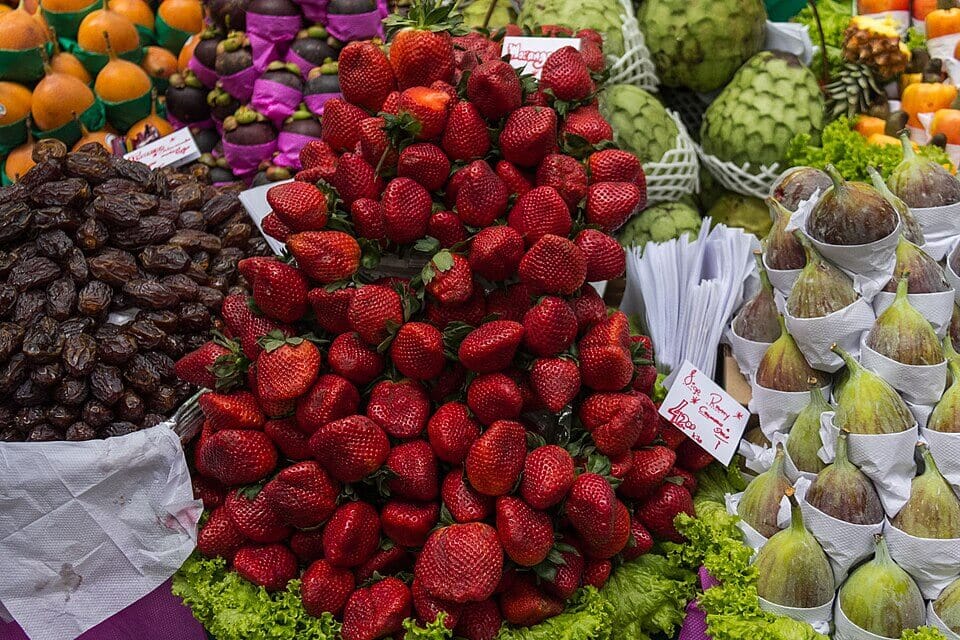
For food lovers, the Mercado Municipal de São Paulo — often called Mercadão — is a true paradise and one of the best things to do in Sao Paulo.
Located in the historic city center, it’s famous for its oversized mortadella sandwiches, crispy pastel de bacalhau (codfish pastry), and an impressive variety of fruits, spices, cheeses, and cured meats.
You don’t even need to buy anything to enjoy the visit. One of the best parts of the Mercadão is the abundance of free tastings. Vendors are usually happy to offer samples, which makes it the perfect place to try unusual fruits you may have never seen before.
I recommend tasting cupuaçu, atemoya, graviola (soursop), tamarind, and acerola.
That said, a quick tip: prices — especially for fruit — tend to be quite high, as this is a very touristy spot. Feel free to taste as much as you want, but don’t feel pressured to buy. If you do decide to purchase something, take your time and ask prices first.
The building itself is also worth attention, with its grand architecture, columns, dome, and beautiful stained-glass windows. As with any busy tourist area, keep an eye on your belongings.
8. Enjoy the Best Viewpoints in São Paulo

Seeing Sao Paulo from above is one of the best things to do in São Paulo. The city is massive, and its viewpoints really help you grasp its scale and energy. Here are the best spots:
- Sesc Avenida Paulista (Viewpoint) – One of the most accessible and popular viewpoints in the city, with a great panoramic view over Avenida Paulista. Booking in advance is required via the Credencial Sesc app. Sunset time (around 5–6:30 pm) is the most popular slot.
- Terraço Itália – A classic São Paulo experience. You can visit the bar for a drink and enjoy sweeping views of the skyline, especially beautiful at night.
- Edifício Copan – An architectural icon designed by Oscar Niemeyer. Visiting the building is an experience in itself, and guided visits offer great city views.
- Edifício Martinelli – One of São Paulo’s most historic skyscrapers, with viewpoints that offer a classic perspective of the downtown area.
- Farol Santander – A mix of museum, cultural center, and observation deck, with excellent views of São Paulo’s historic center.
- Sampa Sky – A glass platform on the 42nd floor in downtown São Paulo. Inspired by Chicago’s sky decks, it offers a thrilling experience with a straight-down view of the city.
Personal note: It’s good to go in already knowing there may be some waiting time. Once on the platform, you have about a minute to take photos — so plan your shot in advance. - Skye Bar – If you want views plus cocktails, this rooftop bar at Hotel Unique is a great choice. The pool and skyline backdrop make it one of the most stylish spots in the city.
- Museu de Arte Contemporânea da USP – Offers a free terrace with beautiful views over Ibirapuera Park. You can also enjoy drinks at Vista Ibirapuera, the restaurant on-site.
- Roda Rico São Paulo – São Paulo’s new Ferris wheel, located in Parque Cândido Portinari, next to Parque Villa-Lobos. It offers a slow, panoramic ride with wide views of the city and the surrounding green areas — a relaxed way to see São Paulo from above.
Whether you prefer classic viewpoints, modern glass platforms, or rooftops with drinks, São Paulo has options for every style — and each one reveals a different side of the city.
9. Get Inspired by Street Art in Vila Madalena & Batman Alley
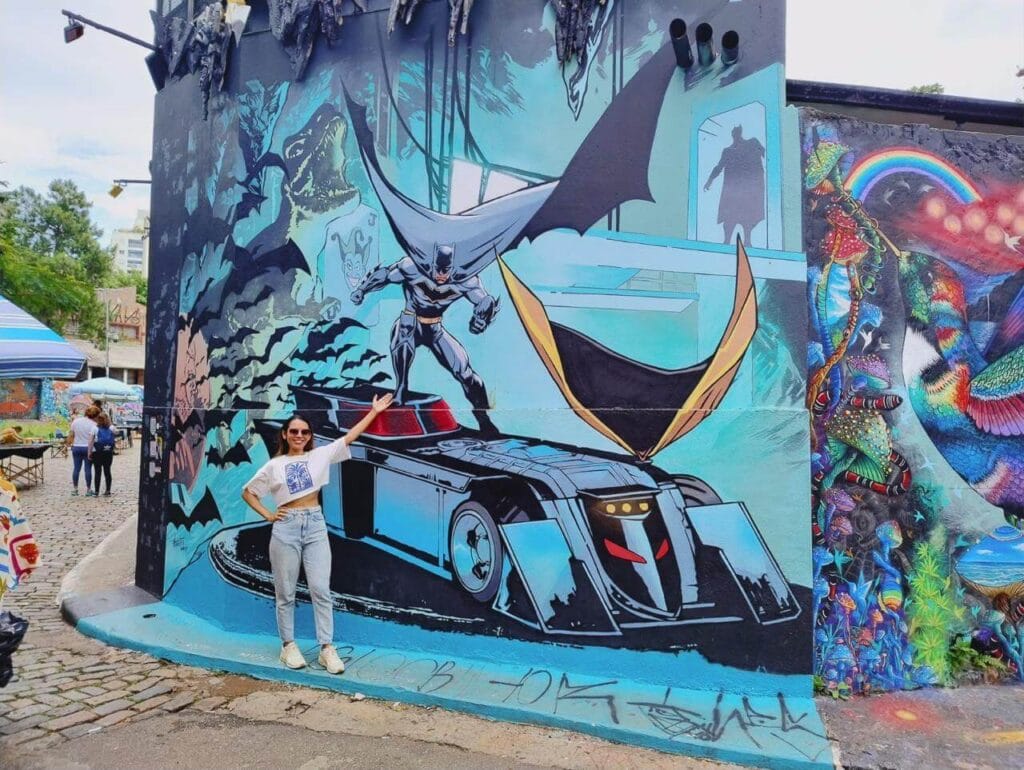
Art in Sao Paulo goes far beyond museums. One of the best things to do in Sao Paulo is simply walking the streets and discovering its vibrant graffiti scene — and Vila Madalena is the best place to do that.
The main highlight is Beco do Batman, an open-air gallery filled with colorful murals by local and international artists. The artwork changes constantly, so every visit feels different — and it’s easily one of the most photographed spots in the city.
But Vila Madalena offers much more than just Batman Alley. As you walk around, you’ll spot iconic works by artists like Eduardo Kobra, along with independent galleries, studios, thrift stores, and small design shops. It’s free, accessible art and a great way to experience Sao Paulo’s creative side.
My personal route: start at Escadaria do Patápio, explore Batman Alley, stop by ZIV Gallery inside the alley, and then head to Beco do Nego. After that, walk to Rua Aspicuelta to eat or grab a drink — it’s one of the liveliest streets in the neighborhood.
If you’d rather keep the focus on food, another great option is heading to the Mercado Municipal de Pinheiros, which is less touristy and perfect for a relaxed meal.
⚠️ Safety Tip: Vila Madalena is generally very relaxed and feels safe to walk around, especially during the day and early evening. As always, basic precautions apply, but overall it’s one of the most laid-back and comfortable neighborhoods in São Paulo for exploring on foot.
🎨 If you want to explore Vila Madalena beyond walking on your own, I recommend this bar and street art crawl with a local guide. The tour mixes São Paulo’s best street art — including Beco do Batman — with stops at local bars, giving you a great feel for the neighborhood’s creative, bohemian vibe.
10. Visit the Pinacoteca & Arrive via Luz Station
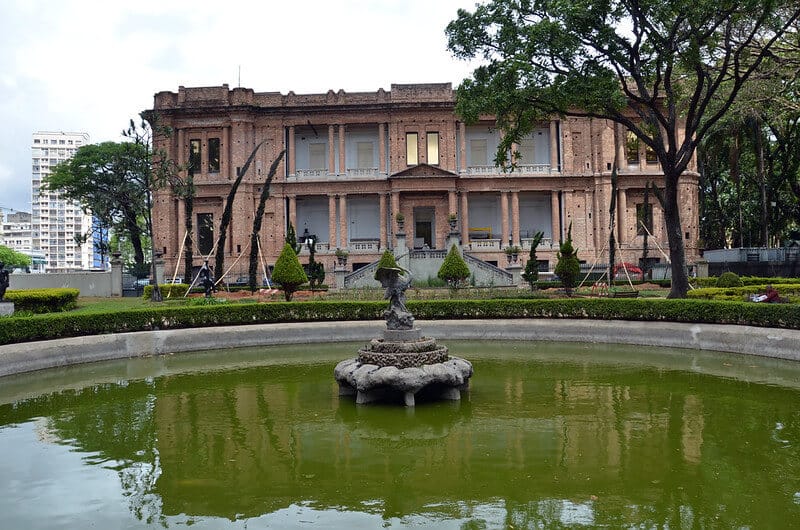
The Pinacoteca de Sao Paulo is one of the most important art museums in the city — and also one of the most beautiful places in Sao Paulo. The 19th-century brick building alone is worth the visit, even before stepping inside.
Once there, you’ll find an excellent collection featuring major Brazilian artists such as Portinari and Anita Malfatti.
In addition to the main building, make sure to also check out Pina Luz and Pina Contemporânea, two nearby spaces that complement the museum with temporary exhibitions and contemporary art. Together, they form one of the most interesting cultural clusters in the city.
The best way to get there is by metro, arriving at Estação da Luz, one of São Paulo’s most impressive historic stations. Just walking through the station already feels like part of the experience.
While you’re in the area, it’s easy to combine your visit with other nearby attractions, such as the Museu da Língua Portuguesa, beautifully reopened after a major restoration, the Museu Catavento, a great option for families, and the Museu de Arte Sacra.
⚠️ Safety Tip: the area around Luz is well policed, especially near the museums and the station. Still, as with other central areas, it’s important to stay aware of your surroundings, keep your phone and wallet out of sight, and avoid wearing valuables.
11. Start Your Day at a Traditional Padaria (bakery)
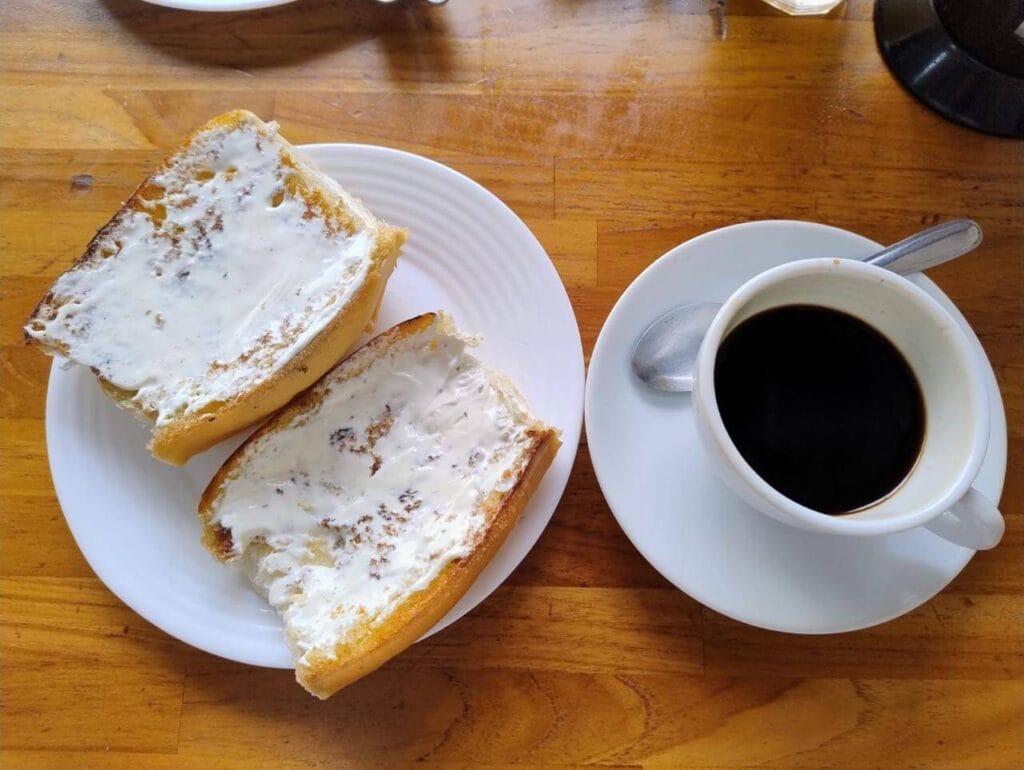
Starting the day at a padaria is a very Sao Paulo thing to do — and honestly, one of the simplest pleasures in the city. Locals love the practicality of grabbing breakfast at a bakery, and it really does feel like there’s one on every corner.
On busy sightseeing days, a quick breakfast is more than enough to keep you going: pão de queijo and café com leite are classic choices. If you’re not into sweets, most bakeries also offer generous savory options, including eggs, sandwiches, and filled breads.
One absolute São Paulo classic you should try is média com pão na chapa. A média is a café com leite (strong coffee mixed with milk), served with pão na chapa — crispy grilled bread with butter or requeijão (Brazilian cream cheese). It’s simple, filling, and very local.
Some of the best padarias to experience this tradition include:
- Padaria Bella Paulista – a classic São Paulo bakery, open 24/7 and always buzzing, conveniently located just steps from Avenida Paulista.
- Galeria dos Pães – Trendy, spacious, and great for both breakfast and snacks.
- Padaria São Domingos – Traditional and very popular among locals.
12. Visit the Museu do Ipiranga

One of the most beautiful spaces dedicated to art and history in Sao Paulo, the Museu do Ipiranga tells key chapters of Brazilian history and everyday life from past centuries.
The museum impresses not only for its rich collection, but also for its stunning architecture and beautifully designed gardens — making it an unmissable stop in the city.
After nine years of renovation, the museum reopened in 2022 completely renewed, with expanded exhibition areas, restored spaces, and modern multimedia resources.
The museum is located inside Independência Park, which is spacious, well maintained, and very pleasant for a walk before or after your visit.
⚠️ Safety Tip: the museum and park area feel calm and well organized, with security presence, especially during visiting hours. As always, basic precautions apply, but it’s generally a comfortable and safe area to explore.
13. Watch a Football Game in São Paulo

Watching a football match is one of the most authentic experiences you can have in Sao Paulo.
The city is home to some of the biggest and most passionate football clubs in Brazil, and the atmosphere inside the stadiums is unforgettable — even if you’re not a hardcore fan.
You can catch matches at some of the most iconic stadiums in the country:
- Arena Corinthians – Also known as Neo Química Arena, this is the modern home of Corinthians and one of the most impressive stadiums in Brazil.
- Allianz Parque – Palmeiras’ stadium, located in Barra Funda, known for its great structure, lively crowd, and frequent big matches.
- Estádio do Morumbi – Home of São Paulo FC, one of the largest stadiums in Brazil and a classic venue in the city.
Even if you don’t attend a game, some stadiums also offer guided tours that take you behind the scenes, including locker rooms and pitch-side views.
⚠️ Safety Tip: going to a match is generally safe, especially if you arrive early and follow the crowd. It’s best to use public transport or ride apps, avoid wearing rival team jerseys, and keep personal belongings secure — standard precautions for large events.
⚽ If you want to watch a football match in São Paulo with a local host, you can choose between three great experiences. Feel the energy of Corinthians with this Corinthians match experience, enjoy a game of São Paulo FC at Morumbi Stadium with this São Paulo FC experience, or watch Palmeiras live at Allianz Parque with this Palmeiras match experience.
14. Attend a Concert at Theatro Municipal de São Paulo
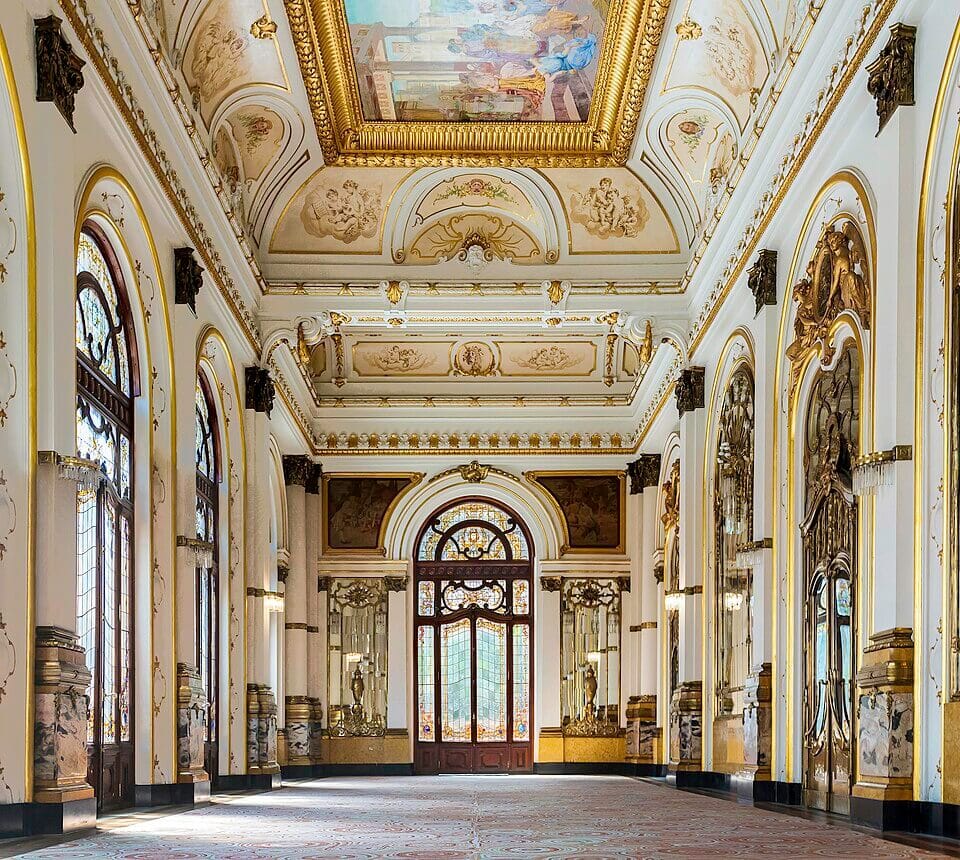
Inspired by the Paris Opera and inaugurated in 1911, Theatro Municipal de São Paulo is one of São Paulo’s most iconic landmarks and one of the most important theaters in Brazil.
Located in the city center, it stands out for its luxurious architecture, with Renaissance and Baroque influences on the façade and a richly decorated interior. Inside, the theater is pure grandeur. Even before the performance begins, just being inside the building already feels like an experience.
Theatro Municipal hosts a wide range of cultural events, including operas, classical concerts, ballet performances, and special presentations throughout the year.
There are also guided tours and free visits, which are a great option if you can’t fit a show into your schedule.
I attended a concert there and absolutely loved it — it was a very emotional experience and one of those moments that really stay with you.
⚠️ Safety Tip: the area around the theater is not among the safest in São Paulo. If you’re walking nearby, stay aware of your surroundings and keep valuables out of sight. Whenever possible, arriving by ride app or public transport and going straight in and out of the theater is the most comfortable option.
15. Stroll Along Rua Oscar Freire
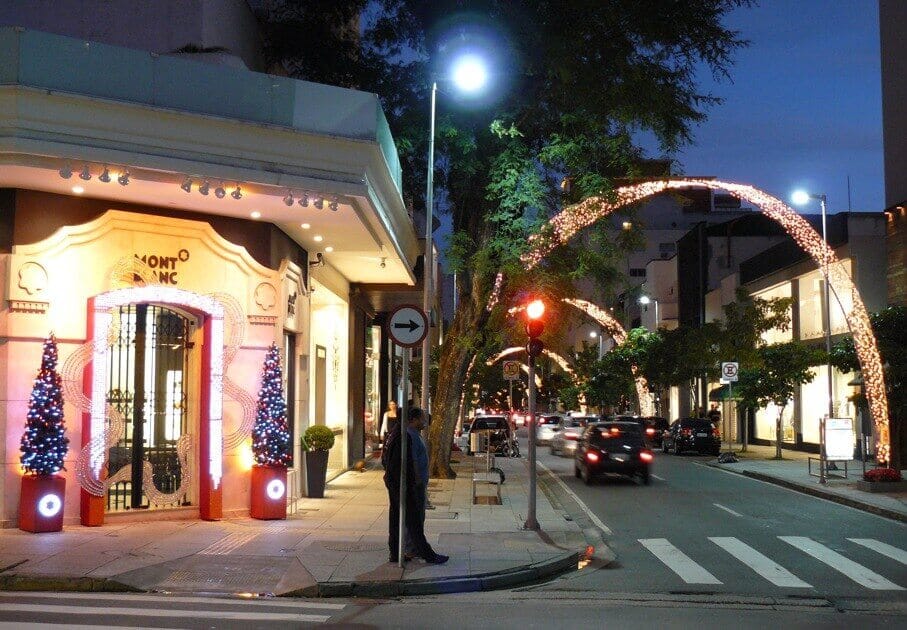
If there’s one street that represents Sao Paulo’s elegant and sophisticated side, it’s Rua Oscar Freire. Known for its luxury brands, stylish restaurants, hotels, and cafés, this is one of the most glamorous addresses in São Paulo — and a very pleasant place to explore on foot.
Often described as an open-air shopping mall, Oscar Freire brings together more than 200 stores and is perfect not only for shopping, but also for walking, window-shopping, having lunch, or simply sitting down for a coffee and watching the constant flow of people. Even if you’re not planning to buy anything, the stroll itself is worth it.
A good reference point is to start your walk where Oscar Freire meets streets like Haddock Lobo and Bela Cintra. From there, just wander without rushing, explore the surrounding blocks, and, if your budget allows, check out some of the best Brazilian and international brands.
Rua Oscar Freire is considered one of the safest and most comfortable streets in Sao Paulo for walking, especially during the day, making it ideal for a relaxed stroll.
16. Eat a Classic Pastel de Feira
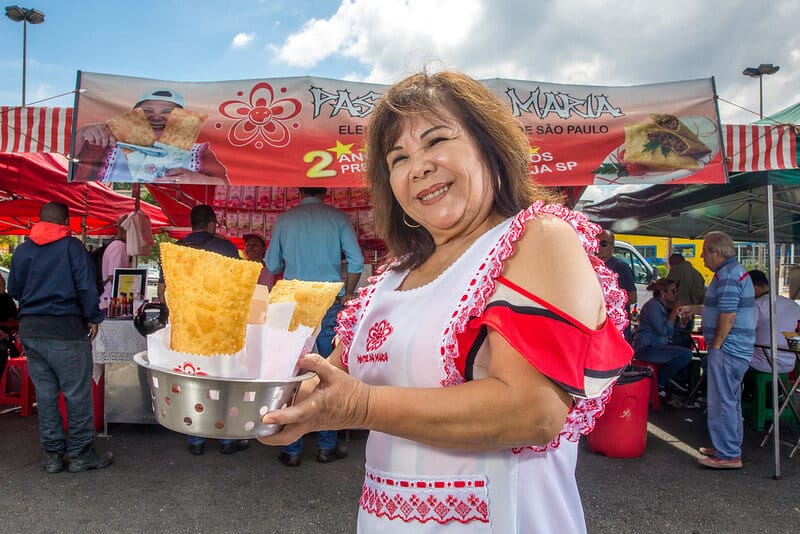
The pastel is one of Sao Paulo’s most beloved street foods. You’ll find it all over the city, and locals passionately debate where to find the best one — there are even competitions to crown the top pastel in town.
But while you can grab a pastel on almost any corner, the best place to try it is at a street market (feira livre).
Even if you don’t plan to eat, visiting a feira is an experience in itself. Strolling through the stalls, you’ll see fresh fruits, vegetables, herbs, and local products, all while soaking in a very authentic side of São Paulo’s daily life. Add a hot, freshly fried pastel to the mix, and it gets even better.
If you want to try some of the city’s most famous versions, look for:
- Pastel da Maria – One of the most traditional and award-winning pastels in the city.
- Pastel Kyoto – Another classic name, very popular among locals.
Street markets happen all over the city, on different days of the week. There’s even a feira on Avenida Paulista on Sunday mornings.
17. Wander Along Rua 25 de Março
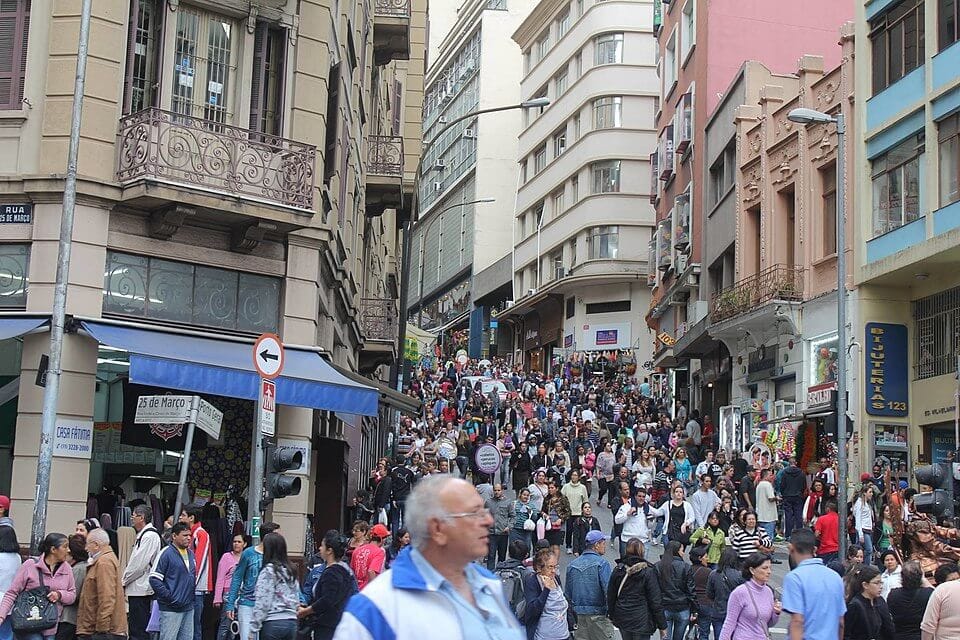
Walking through Rua 25 de Março is an experience like no other in Sao Paulo. This is the city’s most famous shopping street, known for its intense pace, endless variety of stores, and incredibly competitive prices.
My tip? Don’t try to keep up with the rush. Instead, slow down and enjoy the chaos. Have fun browsing the most unexpected shops, testing unusual products, and laughing at the sheer abundance of things you never knew existed — but suddenly feel you absolutely need.
That said, it’s very hard to leave empty-handed. Prices are genuinely attractive, especially for small items, gifts, party supplies, fabrics, accessories, and random objects.
⚠️ Important note: Rua 25 de Março is extremely crowded, and vendors frequently approach passersby to promote their products. If you don’t enjoy very busy places or don’t like being constantly approached while shopping, this may not be the best experience for you. If you do go, stay very alert, keep your phone and wallet well secured, avoid exposing valuables, and be cautious of common scams. Going with a crossbody bag and keeping belongings close to your body makes the experience much smoother.
18. Visit Pico do Jaraguá (Sao Paulo’s Highest Point)
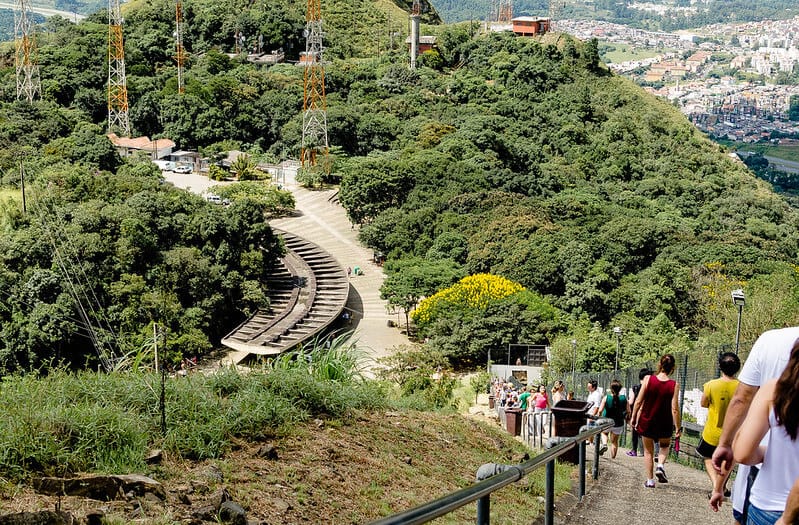
Located between São Paulo’s west and north zones, Pico do Jaraguá is the highest point in the city, reaching 1,135 meters above sea level. It sits inside the Parque Estadual do Jaraguá, a protected Atlantic Forest area— and it’s a great option if you want nature, views, and a break from the urban landscape.
The park covers nearly 492 hectares and preserves native fauna and flora, offering a very different side of Sao Paulo. From the top, you get wide views over the western part of Greater Sao Paulo.
You can reach the summit in two ways:
- By road via the Estrada Turística do Jaraguá, which leads close to the top
- On foot via the Trilha do Pai Zé, a 1.45 km trail surrounded by Atlantic Forest
At the top, you’ll see large broadcast antennas and a staircase that takes you a bit higher for even better views. Inside the park, there are also historic elements, and early mining activity, as well as three nature trails offering full contact with the forest.
⚠️ Safety Tip: the park is a protected area and generally feels calm and safe during the day. Stick to marked trails, wear proper shoes, bring water, and avoid visiting too late in the afternoon. Going by car or ride app is the most practical option.
👉If you want to explore Pico do Jaraguá with a guide, I recommend choosing between two tours, depending on what you want to experience. The Pico do Jaraguá Rainforest Hike follows the Pai Zé trail through the Atlantic Forest to the highest point in São Paulo, while the Atlantic Forest Hike in Jaraguá Park combines forest trails, and access to the summit via the 242-step staircase.
19. Visit the Football Museum & the Brazilian Art Museum (FAAP)
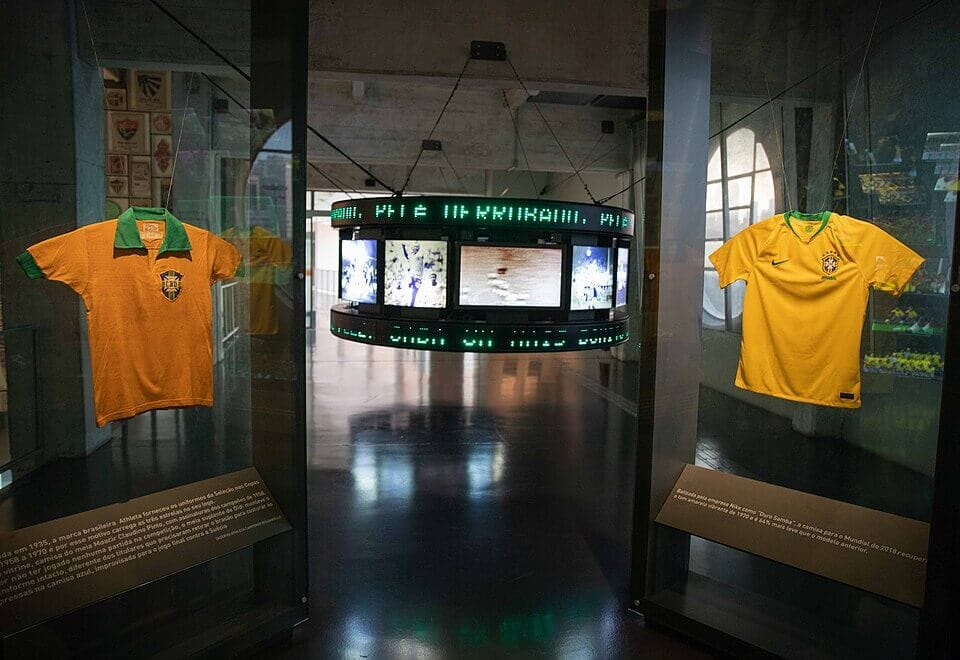
Located in the charming Pacaembu neighborhood, the Museu do Futebol and the nearby Museu de Arte Brasileira da FAAP make a great pairing for a relaxed morning of culture in Sao Paulo.
The Football Museum, housed inside the Pacaembu Stadium, is interactive, engaging, and full of curiosities about Brazilian football. You don’t need to be a hardcore fan to enjoy it — the exhibitions do a great job of connecting football to Brazil’s history, identity, and emotions.
Just a 10-minute walk away, the Brazilian Art Museum at FAAP offers a rich and well-curated collection featuring major names of Brazilian art such as Portinari, Tarsila do Amaral, Di Cavalcanti, Anita Malfatti, Alfredo Volpi, Lygia Clark, Tomie Ohtake, Lasar Segall, Iberê Camargo, and others.
Together, these two museums offer a nice balance between popular culture and fine arts — an easy and rewarding combination if you want to explore São Paulo beyond the most obvious attractions.
⚠️ Safety Tip: Pacaembu is a calm, residential neighborhood and generally feels safe during the day. As always, basic precautions apply, but it’s a comfortable area to walk between museums.
20. Relax at Horto Florestal (Parque Estadual Alberto Löfgren)
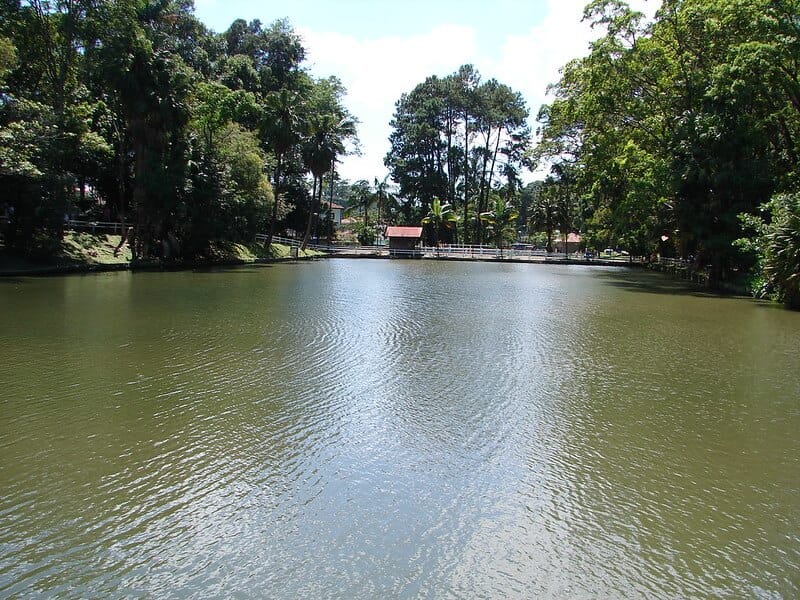
Horto Florestal, located in the North Zone, it’s one of the city’s oldest parks and offers a peaceful escape surrounded by nature — with an area even larger than Ibirapuera.
The park preserves a rich stretch of Atlantic Forest, with lakes, wide paths, picnic areas, and many animals roaming freely. You’ll also find exotic and native trees like eucalyptus and pau-brasil, making the walk especially pleasant.
One highlight inside the park is the Museu Florestal Octávio Vecchi. It’s small but surprisingly interesting. If you’re walking through the park, it’s worth setting aside about an hour to stop by.
On weekends, there’s also a brunch served at the Palácio do Horto, the governor’s former summer residence located inside the park. I haven’t tried it yet, but it’s definitely on my list.
⚠️ Safety note: the Horto Florestal is calm, well used by locals, and feels very safe during the day — perfect for slow walks and relaxing outdoors.
21. Explore Parque da Cantareira & the Pedra Grande Trail
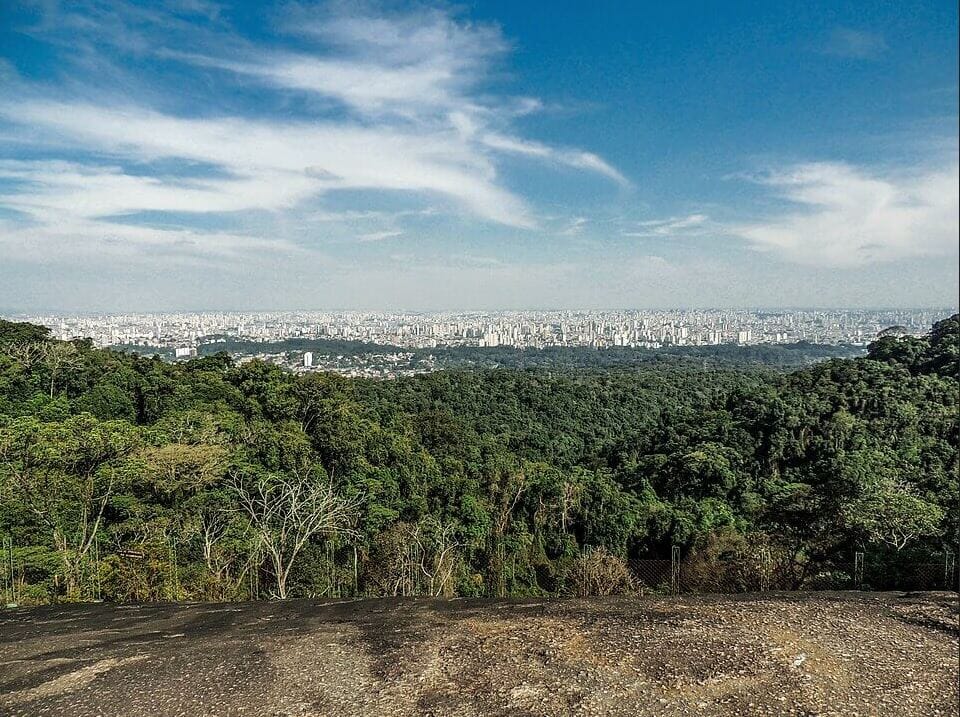
Right next to the Horto Florestal, the Parque Estadual da Cantareira is one of the largest urban forests in the world, with nearly 8,000 hectares of preserved Atlantic Forest. It’s an excellent option if you want to combine nature, hiking, and impressive views — all without leaving the city.
The park has several access points, but one of the most popular experiences is the Pedra Grande Trail, which leads to a panoramic viewpoint overlooking Sao Paulo. The trail starts at the Núcleo Pedra Grande and includes uphill sections, so be prepared for a moderate hike.
⚠️ Safety note: the park is protected and generally safe, but it’s important to stay on marked trails, wear proper shoes, bring water, and avoid late-afternoon hikes.
If you have time, combining Horto Florestal + Parque da Cantareira makes for a perfect day focused on nature and fresh air in Sao Paulo.
💡 If you enjoy hiking and want to experience the Cantareira more deeply, I recommend this guided rainforest hike. It takes you through forest trails, includes a refreshing waterfall stop, and ends with the views from Pedra Grande — it’s a great way to explore the park.
22. Explore Other Parks in Sao Paulo
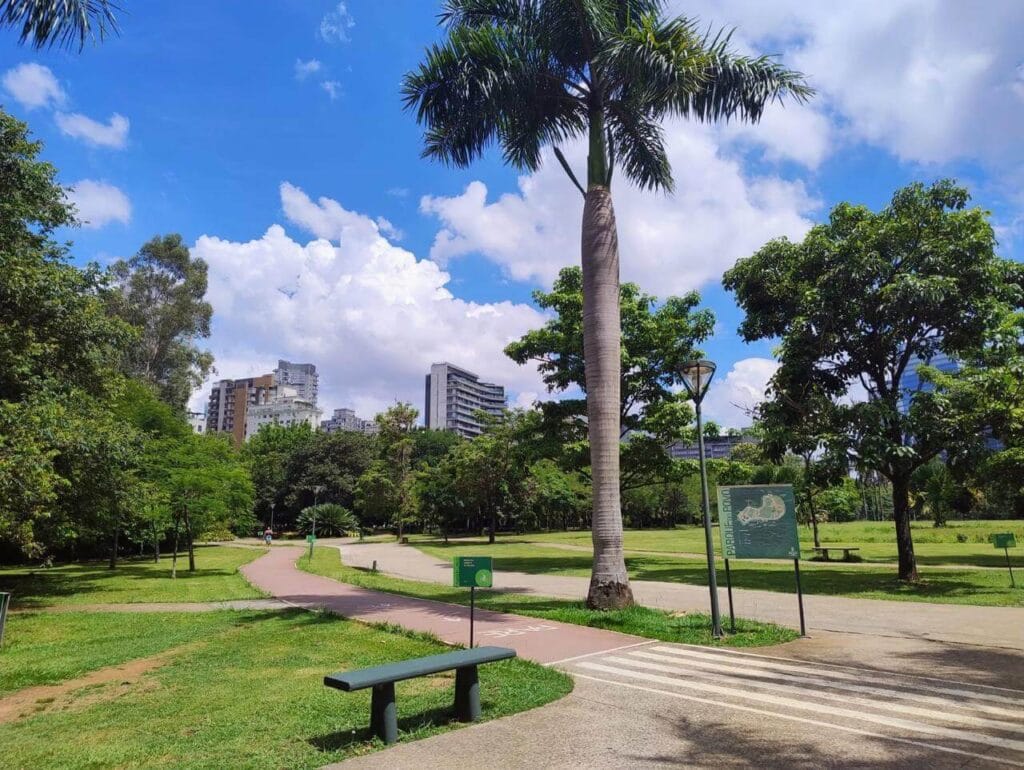
Ibirapuera isn’t Sao Paulo’s only green space — far from it. The city has several parks that feel like small escapes from the concrete, perfect when you’re looking to slow down or balance busy sightseeing days.
Here are some great options to include in your itinerary:
- Jardim Botânico de São Paulo – One of the most beautiful parks in the city, with themed gardens, wooden walkways, and patches of Atlantic Forest. You can even visit the source of the Ipiranga Stream. A calm, scenic walk that feels far from the city.
- Parque Villa-Lobos – Great for sports and outdoor activities, with wide paths for walking and cycling, frequent free events, and the excellent Biblioteca Parque Villa-Lobos, which hosts cultural activities year-round.
- Parque da Água Branca – A charming, central park with farm animals roaming freely, historic buildings, and a very relaxed atmosphere.
- Parque da Aclimação – A neighborhood-style park with a lake and shaded paths, ideal for a quiet break.
- Parque Buenos Aires – Small but pleasant, filled with outdoor sculptures and surrounded by classic residential buildings.
- Parque do Povo – A great option if you’re staying in the Itaim Bibi area. This modern, well-maintained park is popular with locals for walking, running, and relaxing between meetings or sightseeing. It’s flat, easy to explore, and surrounded by restaurants and cafés.
⚠️ Safety Tip: these parks are generally safe and well used by locals, especially during the day. Stick to main paths, keep basic precautions with belongings, and you’ll have a very pleasant experience.
23. Take a Panoramic Flight Over Sao Paulo
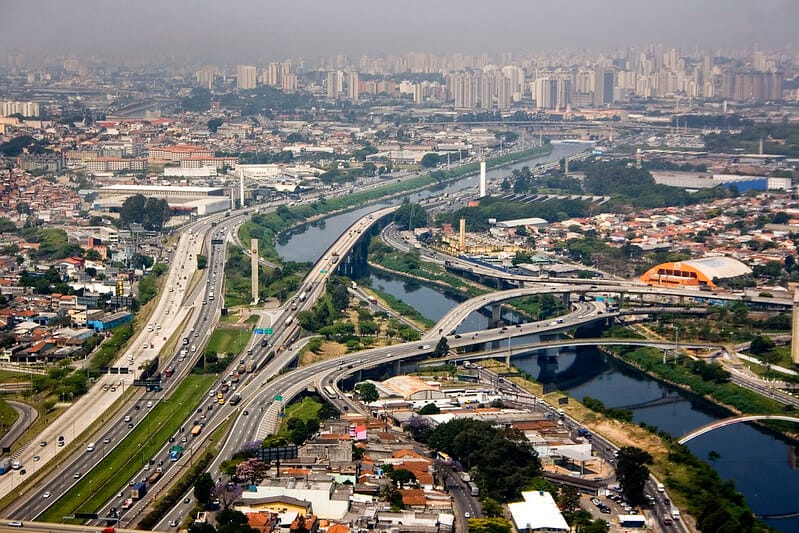
Seeing Sao Paulo from above is a completely different experience — and one of the most impressive ways to understand the sheer size of the city. A panoramic flight, usually by helicopter, offers breathtaking views of Sao Paulo’s skyline, landmarks, and endless neighborhoods stretching in every direction.
During the flight, you’ll typically fly over areas like Avenida Paulista, Ibirapuera Park, the historic downtown, and some of the city’s most iconic buildings. It’s especially striking at sunset, when the city lights start to come on and Sao Paulo truly shows its scale.
Flights usually last between 15 and 30 minutes, which is enough to get an unforgettable perspective of the city. While it’s definitely a splurge, it’s a unique experience — perfect if you’re celebrating something special or want to see Sao Paulo in a truly memorable way.
Good to know: flights depart from heliports around the city and must be booked in advance. Weather conditions can affect schedules, so it’s best to stay flexible.
24. Eat Your Way Through Sao Paulo
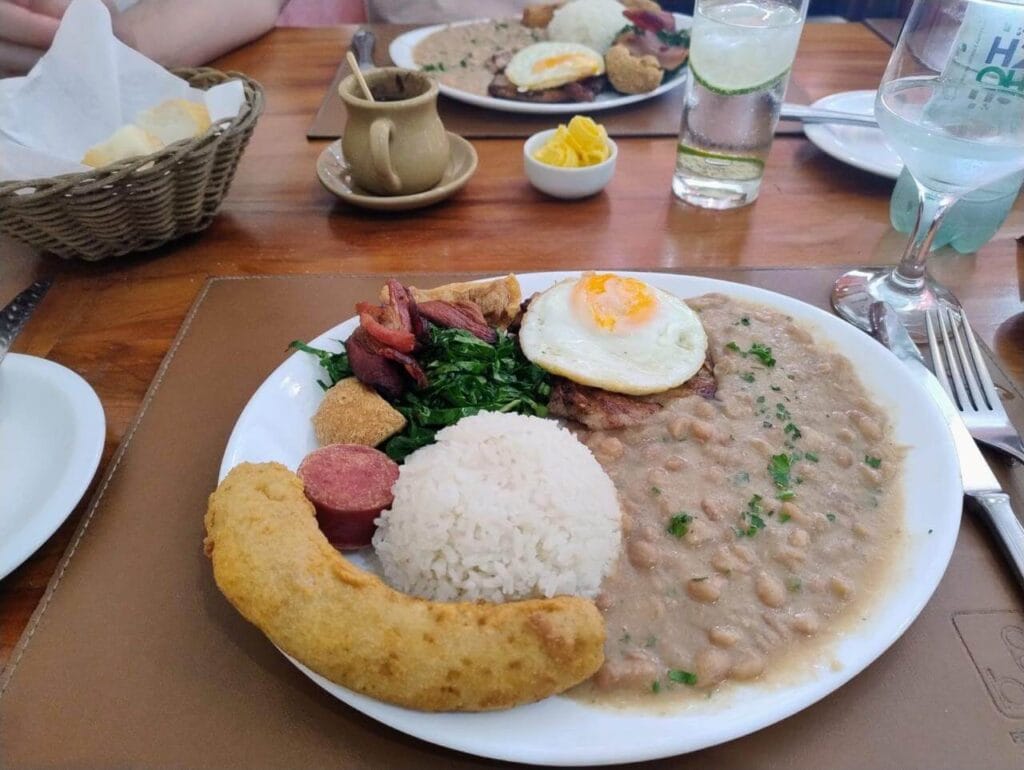
Food is not just part of the trip in Sao Paulo — it’s one of the main reasons to visit. Sao Paulo’s dining scene is undoubtedly one of the best in Latin America, with 17 Michelin-starred restaurants alongside countless casual spots locals swear by.
Thanks to the city’s multicultural roots, you’ll find outstanding Italian, Japanese, Lebanese, Korean, and of course Brazilian cuisine, often side by side on the same block.
Below, I’ve grouped the main food neighborhoods from more tourist-friendly to more local, so you can choose what best fits your style and time.
Most tourist-friendly (easy, central, great for first-timers)
- Liberdade – The city’s Asian food hub, packed with Japanese, Chinese, and Korean restaurants. Ramen is a highlight, and the weekend street market is great for affordable bites.
- Jardins – Elegant and central, with many Michelin-starred and Michelin-recommended restaurants, refined bistros, and chef-driven concepts.
- Cerqueira César – Close to Avenida Paulista, full of well-known restaurants and bars, mixing upscale dining with lively streets.
Popular with food-focused travelers (still easy, more “local vibe”)
- Itaim Bibi – One of Sao Paulo’s main fine-dining districts. Expect high-end international cuisine and polished settings, especially around Amauri and neighboring streets.
- Pinheiros – Very diverse: modern restaurants, bakeries, wine bars, classic botecos, and nightlife. Great to explore without a strict plan.
- Vila Madalena – Relaxed and creative, with casual restaurants, bars, and places made for long afternoons that turn into evening plans.
More local & traditional (less touristy, worth it if you have time)
- Bixiga (Bela Vista) – Classic Italian cantinas and a strong sense of tradition; generous portions and old-school atmosphere.
- Vila Mariana – Known for boteco food and casual dining, with plenty of bars, cafés, and everyday local spots.
- Mooca – Deep Italian roots, famous for its cantinas and some of the city’s best pizzas.
- Bom Retiro – Multicultural and less obvious, offering Korean, Jewish, and other international cuisines.
How to choose quickly:
- Asian cuisine: Liberdade, Bom Retiro
- Fine dining & sophistication: Itaim Bibi, Jardins, Cerqueira César
- Bars & creative atmosphere: Vila Madalena, Pinheiros
- Italian classics: Bixiga (Bela Vista), Mooca
What I love most about eating in São Paulo is that there’s no single right way to do it. You can start the day at a padaria, grab street food at a feira, have a long lunch at a neighborhood restaurant, and end the night with a tasting menu — all in the same day.
25. Experience São Paulo at Night: Bars & Rooftops
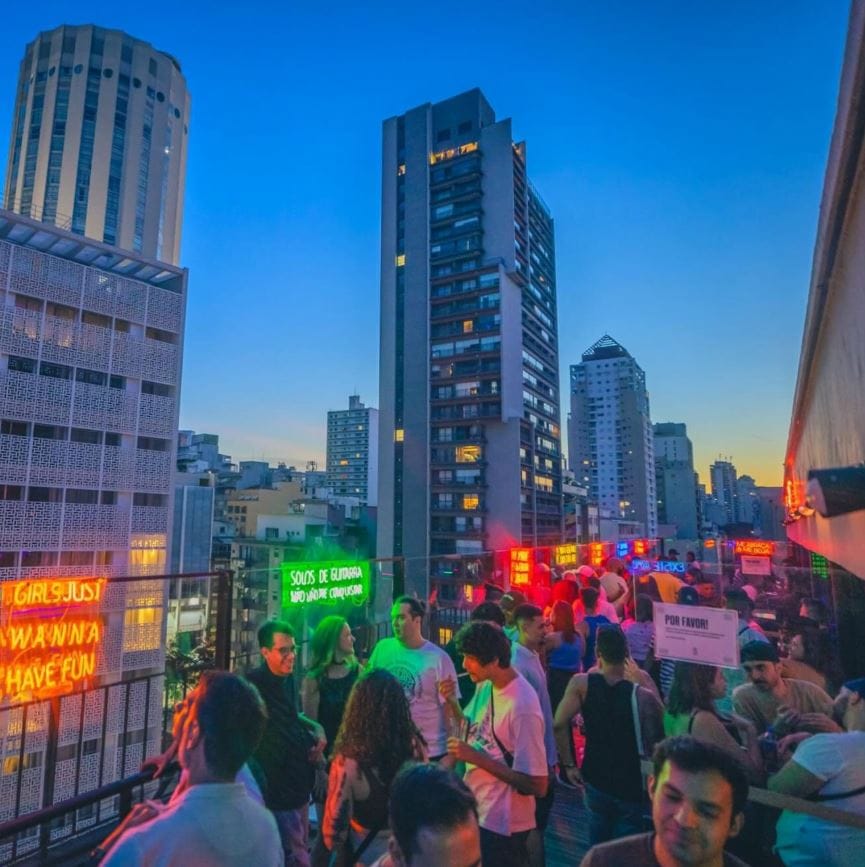
São Paulo truly comes alive at night — and experiencing the city after dark is one of the best things to do in São Paulo. From classic bars to sophisticated rooftops with skyline views, the city offers plenty of options to enjoy a drink, and listen to music.
If you enjoy views and atmosphere, rooftop bars are a great place to start:
- Skye Bar – One of the city’s most iconic rooftops, with a striking pool, creative cocktails, and a panoramic view that feels unmistakably São Paulo.
- Terraço Itália – A classic choice for night views over downtown, combining cocktails, city lights, and a sense of old-school elegance.
- Tokyo – A modern and lively rooftop in downtown São Paulo, known for its city views, DJs, and energetic vibe. It’s a great option if you want something more contemporary and informal.
Beyond rooftops, São Paulo’s bar scene is just as diverse as its food scene. Neighborhoods like Pinheiros, Jardins, Vila Madalena, and Itaim Bibi are packed with bars ranging from laid-back spots to award-winning cocktail bars.
⚠️ Safety Tip: nightlife areas are generally lively and well frequented, but it’s best to use ride apps at night, avoid flashing valuables, and stick to busy streets — especially when moving between bars.
🌙 If you want to experience São Paulo’s nightlife with a group, I recommend this pub crawl tour. It takes you to bars and a nightclub in Pinheiros or Vila Madalena, includes an open bar at the first stop, drinking games, and free entrance to all venues — a fun and easy way to enjoy the city at night.
Final Tips for the Best Things to Do in Sao Paulo
São Paulo is a city that rewards curiosity. It’s intense, diverse, and full of contrasts — and the best way to experience it is by mixing classic sights with everyday local experiences.
Balance busy days with parks and cultural spaces, explore different neighborhoods at different times of day, and don’t try to do everything at once.
A few final tips to make the most of your trip:
- Plan by area to avoid long commutes and fatigue
- Mix culture, food, and nature in your daily plans
- Leave room for spontaneity — some of the best moments happen unexpectedly
- Eat well (this one is non-negotiable in São Paulo 😉)
São Paulo may not be love at first sight, but it has a way of growing on you. And once it does, it’s hard to let go.